
The Engineering of Effortless Operation: What Makes a High-End Sliding Door Slide So Smoothly?
The most striking feature of a slimline sliding door system like the Cortizo Cor Vision is the sheer scale of the glass. These panels can be massive—often hundreds of kilograms each—yet they glide open with a mere touch, feeling almost weightless.
This effortless operation is not magic; it’s a direct result of meticulous engineering focused on three critical, often-unseen components: the rollers, the track, and the structural design.
Here is a deep dive into the hidden mechanics that ensure a large glass wall moves with the precision of a Swiss watch.
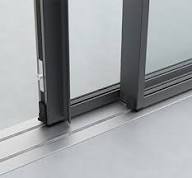
1. The Foundation: High-Performance Roller Assemblies
The roller system is the heart of the smooth operation. In a high-end slider, these are not simply small wheels; they are complex, multi-component assemblies designed to handle tremendous loads.
-
Load-Bearing Capacity: High-end rollers are precision-engineered to accommodate heavy weights, often rated to safely support panels of 300 kg, 400 kg, or more. They use durable materials, typically stainless steel or high-grade polymers, to prevent deformation or wear over time.
-
Tandem Roller Design: Many top-tier systems use tandem rollers—multiple wheels per assembly—to distribute the panel’s weight evenly across the track. This prevents any single point from bearing excessive stress, ensuring longevity and consistent movement.
-
Precision Bearings: The secret to the gliding motion lies in the bearings. Premium rollers feature precision ball bearings (often sealed for protection against dust and moisture). These components significantly reduce friction, allowing the massive panel to be moved with minimal force.
2. The Path: The Track System and Drainage
The track is the crucial path the rollers follow. A low-quality track will quickly lead to sticking, grinding, and failure. A premium system is designed for both precision and maintenance.
-
Corrosion-Resistant Materials: Since sliding tracks are often exposed to moisture, they must be highly resistant to corrosion. Tracks are typically constructed from hardened stainless steel or robust aluminium.
-
Recessed and Flush Design: For a seamless aesthetic, modern tracks are often installed flush with the interior floor. This requires a sophisticated design that still manages water. High-end systems include integrated drainage channels to efficiently divert rainwater away, preventing standing water that could compromise the rollers or the surrounding floor structure.
-
Self-Centering and Alignment: The track profile is designed to ensure the rollers remain perfectly centred. This precise guidance prevents any side-to-side wobble or rubbing, which is critical for maintaining the tight seals and the door’s effortless feel.
3. Structural Rigidity and Panel Guidance
The structural integrity of the frame and the glass panel itself plays a vital role in smooth operation.
-
Non-Flexing Profiles: When a large, heavy panel is pushed or pulled, the aluminium profile must not flex or twist. High-quality systems use engineered, multi-chambered profiles that provide exceptional rigidity. Flexing would cause the panel to bind in the track, instantly ruining the “effortless” experience.
-
Integrated Handling: The handles themselves are part of the engineering solution. Systems like the Cor Vision often feature a streamlined, integrated handle mechanism. This design ensures that the force exerted by the user is applied directly and optimally to initiate movement, rather than being applied to an external handle that might twist the frame slightly.
-
Precision Manufacturing Tolerances: High-end door manufacturers work within exceptionally tight manufacturing tolerances. This ensures that every panel is perfectly square, every roller housing is precisely aligned, and the gap between the interlock profiles is exact (e.g., the 20mm sightline). This precision guarantees that when the panel moves, it follows a true, straight line.
The Result: A Door That Glides
When premium components—low-friction tandem rollers, corrosion-resistant flush tracks, and highly rigid aluminium profiles—are precision-engineered together, the result is the ultimate user experience.
The door doesn’t slide; it glides. It’s a testament to the fact that in architectural glazing, the unseen engineering details are often the most important features, providing you with years of beautiful, maintenance-friendly, and truly effortless operation.
Planning your next glazed opening? Let us walk you through the technical specifications and operational feel of our high-end sliding door systems.



Leave a Reply
Want to join the discussion?Feel free to contribute!