
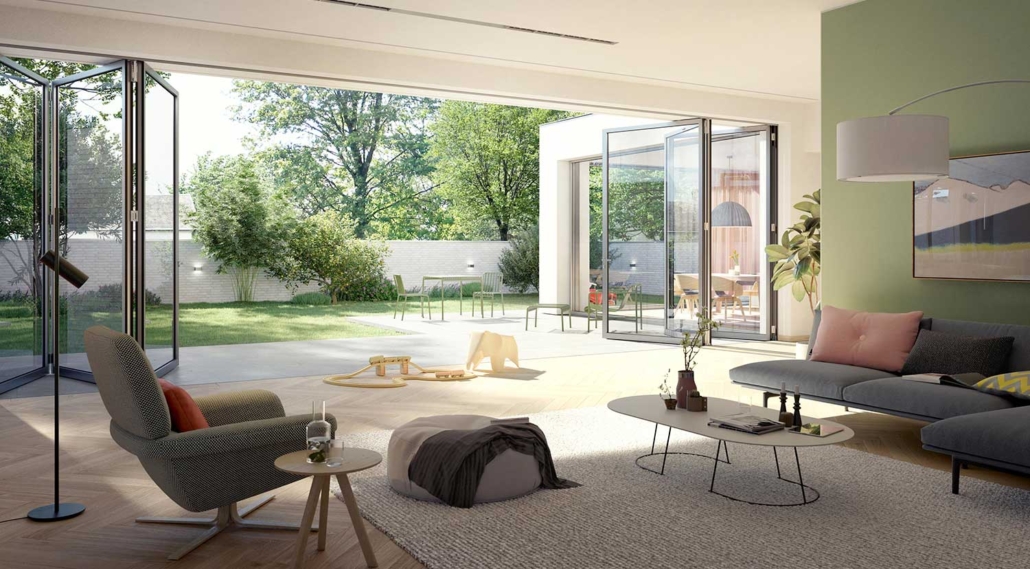
Bifold, Slider, or French Doors: Which Option Fits the Project Brief Best
Choosing the right door system is not always about which product looks best in a brochure.
For installers, builders, and trade buyers, the better question is usually: which option fits the project brief best? The answer will depend on the type of property, the available opening, how the space will be used, and what matters most to the client — whether that is budget, access, appearance, ventilation, or wide uninterrupted views.
Bifold doors, sliding doors, and French doors all have their strengths. The key is matching the product to the job, rather than forcing the job to suit the product.
Here is a practical guide to where each option tends to work best.
Start with the brief, not the product
Before recommending any door system, it helps to step back and look at the full brief.
Ask questions such as:
- how wide is the opening?
- how much everyday access is needed?
- is the priority opening space, natural light, or uninterrupted views?
- is the property modern, traditional, compact, or high-end?
- what budget is available?
- is the customer more focused on practicality or visual impact?
Once those points are clear, it becomes much easier to work out whether bifold, sliding, or French doors are the right fit.
When bifold doors suit the project best
Bifold doors are often the strongest option when the client wants to open up a large section of the rear elevation.
Because the panels fold and stack to one or both sides, they can create a wide opening between inside and outside. That makes them especially popular on kitchen extensions, family homes, and garden-facing living spaces where the goal is flexibility and a strong indoor-outdoor connection.
Bifold doors are often a good fit for:
- rear extensions where the opening needs to feel fully open in summer
- family homes with patios and garden access
- projects where ventilation and flexible access matter
- homeowners who want both a traffic door and full-width opening
- medium to large openings where multiple panels work well
They are particularly useful where the client wants the choice between opening one panel for everyday use or folding the whole system back for entertaining and warmer weather.
Things to consider with bifolds
Bifold doors are not always the best answer for every project.
Because the panels stack, they do introduce more frame lines than a large sliding door. They also need room for the panels to fold back, which may affect furniture layout or usable space near the opening.
That means they may be less suitable where:
- uninterrupted glass is the main design priority
- the client wants the slimmest possible sightlines
- the opening is smaller and would feel overcomplicated with several panels
- internal or external space is tight near the stack position
Bifolds are often the practical all-rounder, but they are not always the cleanest visual solution.
When sliding doors suit the project best
Sliding doors are often the strongest choice when the priority is glass, light, and a more minimal look.
With fewer vertical frame lines and larger glass panels, they tend to suit contemporary designs particularly well. They are a popular option for modern extensions, luxury builds, and projects where the client wants to frame a view rather than open the entire wall.
Sliding doors are often a good fit for:
- modern rear extensions
- high-end homes with large glazed openings
- properties with attractive garden or countryside views
- luxury builds where clean lines matter
- projects where visual impact is more important than maximum opening width
In many cases, sliders suit clients who want a sleek, architectural feel and are happy with a partial opening rather than having the whole aperture open at once.
Things to consider with sliders
Sliding doors do not open in the same way as bifolds.
Because one panel slides behind another, part of the opening always remains covered. That is not a problem on many projects, but it can matter if the client expects the opening to feel completely open in summer.
They may be less suitable where:
- the main priority is creating the largest possible clear opening
- the customer wants all panels moved fully out of the way
- budget is tighter and the brief does not justify a more premium visual option
- the property style is more traditional and a contemporary slider may feel out of place
Sliding doors often win on sightlines and design simplicity, but not always on full opening flexibility.
When French doors suit the project best
French doors remain a very useful option, especially on smaller, more traditional, or more budget-conscious projects.
They are simple, familiar, and often work well where the opening is not especially wide. They can also suit properties where the customer wants a straightforward garden door rather than a feature glazing system.
French doors are often a good fit for:
- smaller patios and terraces
- rental properties
- traditional homes
- side returns and secondary access points
- projects with tighter budgets
- openings where bifolds or sliders would be unnecessary
For many customers, French doors offer the right balance of function, appearance, and cost without adding unnecessary complexity.
Things to consider with French doors
French doors are not usually the best option where the goal is to create a wide glazed feature.
Compared with bifolds or sliders, they generally offer:
- less glass overall
- a more conventional appearance
- a smaller opening width
- less impact on large modern extensions
They are practical and cost-effective, but they are rarely the standout choice for bigger design-led projects.
Which option works best by project type?
Looking at the project type often gives the clearest answer.
Extensions
For rear extensions, bifold and sliding doors are usually the main contenders.
If the client wants flexibility, wide opening access, and strong connection to the garden, bifolds are often the better fit. If the priority is a cleaner glazed look with larger panes and slimmer sightlines, sliding doors may suit the brief better.
French doors can still work on smaller extensions, but on larger openings they are usually the less suitable option.
Rental properties
For rentals, the best choice often comes down to durability, practicality, and budget.
French doors are often a sensible solution here because they are simple, familiar, and cost-effective. In some higher-end rental properties, a slider may help create a stronger visual appeal, but in many cases a straightforward French door set meets the brief more efficiently.
Small patios
For smaller openings and compact patio areas, French doors are often the most natural fit.
They give easy access, suit a wide range of property styles, and avoid overcomplicating the opening. In some cases, a small bifold can work, but it will not always represent the best use of budget or space.
Family homes
For busy family homes, bifold doors often make a lot of sense.
They provide practical day-to-day access, plenty of ventilation, and the option to open the space fully when needed. A traffic door can also make them convenient for everyday use without folding the whole set each time.
That said, sliders can also work well in family homes where the client is more focused on views and natural light than on having the full opening clear.
Luxury builds
For premium projects, sliding doors are often the most natural match.
They suit larger glazed openings, deliver a more contemporary look, and create the kind of clean visual finish many luxury clients want. Bifolds can still work on high-spec homes, especially where usability and opening width are priorities, but sliders tend to align more closely with a sleek architectural brief.
Budget-sensitive jobs
Where budget matters most, French doors are often the most efficient option.
They can deliver a neat and practical result without the cost of a larger feature-door system. Bifolds may still be viable depending on the size and specification, but sliders are often harder to justify on price-led projects unless the design brief specifically calls for them.
The right product is the one that suits the job
There is no universal winner between bifold, sliding, and French doors.
Each system has strengths, and each can be the right answer when matched to the correct project brief. Bifolds tend to suit flexible family living and wider openings. Sliders are often best for modern, design-led spaces where glass and views matter most. French doors remain a strong option for smaller openings, traditional homes, and budget-conscious jobs.
For installers and trade buyers, the most useful approach is to guide the customer based on how the space will actually be used — not just on which door style is currently getting the most attention.
Because when the product fits the brief, the whole project tends to work better.



Leave a Reply
Want to join the discussion?Feel free to contribute!