
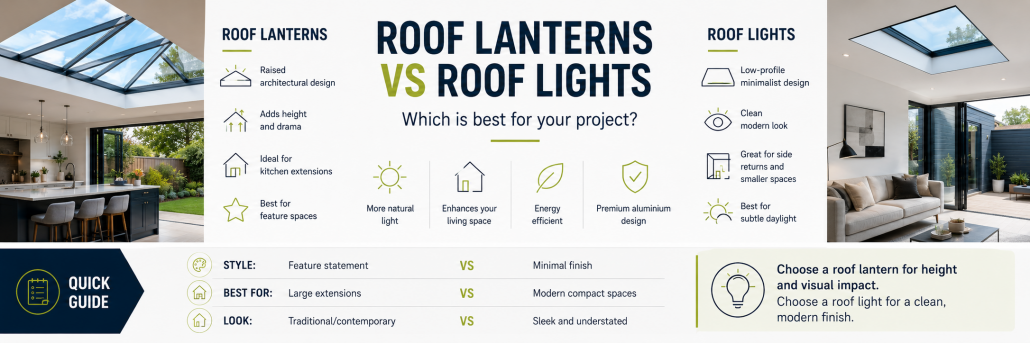
Roof Lanterns vs Roof Lights: Which Is Best for Your Project?
If you are planning a home extension, kitchen renovation or open-plan living space, bringing in more natural light is usually high on the wish list.
Two of the most popular options are roof lanterns and roof lights.
Both can transform a room by flooding it with daylight, making the space feel brighter, larger and more welcoming. But while they may seem similar, roof lanterns and roof lights offer different benefits in terms of style, performance, cost and design impact.
So, which one is best for your project?
This simple guide explains the key differences between roof lanterns and roof lights, helping you choose the right option for your home.
What Is a Roof Lantern?
A roof lantern is a raised glazed structure that sits above a flat roof.
It usually has a pitched or pyramid-style design, with slim glazing bars and multiple glass panels. Roof lanterns are often used on flat-roof extensions, orangeries, kitchen-diners and garden rooms.
Because they project upwards from the roof, roof lanterns create a strong architectural feature both inside and outside the home.
They do not just bring in light. They can also add height, drama and a sense of space.
What Is a Roof Light?
A roof light, sometimes called a flat roof light or skylight, is a glazed unit installed into the roof to allow natural light into the room below.
For flat roofs, roof lights are often designed with a clean, low-profile appearance. They may be fixed, opening, walk-on or frameless-style depending on the project.
Compared with a roof lantern, a roof light is usually more minimal and subtle. It sits closer to the roofline and is often chosen for modern, understated designs.
Roof Lanterns vs Roof Lights: The Main Difference
The main difference is the shape and visual impact.
A roof lantern is raised and architectural. It creates a feature.
A roof light is flatter and more discreet. It creates a clean, minimal finish.
Both bring in daylight from above, but they suit different design goals.
Roof Lanterns: Key Benefits
1. They Create a Striking Design Feature
Roof lanterns are ideal if you want your glazing to become a focal point.
Their raised shape adds character and can make a room feel more impressive. This makes them especially popular for kitchen extensions, dining areas and large open-plan spaces.
2. They Add Height and Space
Because a roof lantern projects upwards, it can create the feeling of extra ceiling height.
This is particularly useful in flat-roof extensions, where a standard ceiling might otherwise feel low or boxy.
3. They Bring in Lots of Natural Light
The angled glass panels of a roof lantern help bring daylight into the room from different directions.
This can make the space feel brighter throughout the day.
4. They Suit Traditional and Contemporary Homes
Roof lanterns can work well on period properties, modern extensions and orangery-style spaces.
The final look depends on the frame colour, glazing bar layout and overall design.
5. They Improve the Feel of Open-Plan Living Spaces
A roof lantern above a kitchen island, dining table or seating area can help define the space and make it feel more inviting.
Roof Lights: Key Benefits
1. They Offer a Clean, Minimal Look
Roof lights are often chosen for contemporary homes and modern extensions.
Their low-profile design keeps the roofline simple and uncluttered, which is ideal if you want the glazing to feel understated.
2. They Can Be More Discreet from Outside
Because roof lights sit closer to the roof, they are usually less noticeable externally than roof lanterns.
This can be useful where planning, neighbours or the overall appearance of the property are important considerations.
3. They Work Well in Smaller Spaces
Roof lights are excellent for smaller rooms, side returns, hallways, bathrooms and compact extensions.
They can add daylight without overwhelming the space.
4. They Can Suit Ultra-Modern Designs
If your project has a clean, architectural style, a flat roof light can help maintain that minimalist finish.
5. They Can Be Easier to Position in Multiple Areas
Some projects use several roof lights rather than one large glazed feature. This can help spread daylight more evenly across the room.
Which Lets in More Light?
Both roof lanterns and roof lights can bring in a significant amount of daylight.
However, the best option depends on the size, position and shape of the glazing.
A large roof lantern can create a bright, open feeling and bring light in from multiple angles. A large roof light can also deliver excellent daylight, especially when positioned well.
In simple terms:
Choose a roof lantern if you want maximum visual impact and a brighter, more open feel.
Choose a roof light if you want clean, direct daylight with a more minimal appearance.
Which Looks Better?
This depends on the style of your home and the look you want to achieve.
Roof Lanterns
Roof lanterns often look more decorative and architectural. They can suit homes where the glazing is intended to be a standout design feature.
They are especially popular for:
- Kitchen extensions
- Dining areas
- Orangeries
- Garden rooms
- Larger flat-roof extensions
- Traditional or transitional designs
Roof Lights
Roof lights usually look more modern and subtle. They are ideal where the aim is to bring in light without adding a prominent roof structure.
They are often used for:
- Modern extensions
- Side returns
- Hallways
- Bathrooms
- Minimalist interiors
- Smaller rooms
- Areas where a lower external profile is preferred
Which Is Best for a Kitchen Extension?
Both options can work beautifully in a kitchen extension.
A roof lantern can look stunning above a kitchen island or dining table, helping to create a central feature. It can make the extension feel taller and more spacious.
A roof light can be better if you want a sleek, simple ceiling design. Multiple roof lights can also be used to spread daylight evenly along the extension.
For many kitchen extensions, the choice comes down to whether you want the glazing to be a feature or a subtle design detail.
Which Is Best for a Flat Roof Extension?
Roof lanterns and roof lights are both commonly used on flat roof extensions.
A roof lantern is best if you want to add height, character and a strong visual statement.
A roof light is best if you want a modern, low-profile look that keeps the roofline clean.
You should also consider the size of the extension, ceiling height, planning requirements, budget and the direction the room faces.
Which Is More Energy Efficient?
Energy efficiency depends on the glazing specification, frame design, thermal performance and installation quality.
Both roof lanterns and roof lights can be designed with high-performance glazing to help reduce heat loss and improve comfort.
When comparing options, ask about:
- U-values
- Solar control glass
- Thermal breaks
- Double or triple glazing
- Warm edge spacer bars
- Ventilation options
- Installation details
A well-specified roof lantern or roof light should help bring in daylight while supporting the overall comfort of the room.
Will a Roof Lantern or Roof Light Make the Room Too Hot?
Any overhead glazing can increase solar gain, especially in south-facing rooms or large open-plan spaces.
This does not mean you should avoid roof glazing. It simply means the glass specification matters.
Solar control glass can help reduce overheating while still allowing plenty of natural light into the room.
Ventilation can also help. Some roof lights and roof lanterns are available with opening sections to improve airflow.
Which Is Better for Ventilation?
Both roof lanterns and roof lights can offer ventilation, depending on the product.
Opening roof lights are a popular option for kitchens, bathrooms and rooms that need extra airflow.
Some roof lanterns can also include opening vents, which can help release warm air that rises to the ceiling.
If ventilation is important, ask whether the product can be fixed, manual opening or electric opening.
Which Costs More?
In many cases, roof lanterns cost more than standard roof lights because they are more complex structures with more frame components and multiple glazed panels.
However, the final cost depends on:
- Size
- Frame material
- Glass specification
- Opening or fixed design
- Colour choice
- Installation requirements
- Project complexity
A simple fixed roof light may be the more cost-effective option. A large bespoke roof lantern will usually be a more premium choice.
The right decision is not always about choosing the cheapest product. It is about choosing the option that best suits your design, budget and long-term goals.
Which Is Easier to Maintain?
Roof lights usually have a simpler design, so they can be easier to clean and maintain.
Roof lanterns have more glazing bars, joints and angled surfaces, which may require slightly more attention.
That said, modern aluminium roof lanterns and roof lights are designed to be durable and low maintenance.
Self-cleaning glass may also be available, helping reduce the amount of cleaning required.
Roof Lanterns vs Roof Lights: Pros and Cons
Roof Lantern Pros
- Creates a strong design feature
- Adds height and architectural interest
- Brings in light from different angles
- Works well in large open-plan spaces
- Suits kitchen extensions, orangeries and garden rooms
Roof Lantern Cons
- Usually more visible externally
- Can cost more than a simple roof light
- May require more cleaning due to glazing bars and angles
- Needs careful specification to manage heat and glare
Roof Light Pros
- Clean and minimal appearance
- Often more discreet from outside
- Great for modern extensions
- Works well in smaller spaces
- Can be used in multiples for even daylight
- Usually simpler in appearance and maintenance
Roof Light Cons
- Less of an architectural feature
- May not add the same sense of height
- Larger units may need careful glass specification
- Placement is important to get the best daylight effect
Which Is Best for Your Project?
The best choice depends on what you want the glazing to achieve.
Choose a Roof Lantern If…
You want a standout feature that adds height, drama and a more traditional or architectural feel.
A roof lantern may be best if you are designing:
- A large kitchen extension
- An orangery-style room
- A dining area
- A garden room
- A space where the glazing should become a focal point
Choose a Roof Light If…
You want a clean, modern and understated way to bring in daylight.
A roof light may be best if you are designing:
- A modern flat-roof extension
- A side return
- A hallway
- A bathroom
- A minimalist kitchen
- A smaller space that needs more natural light
Can You Use Both?
Yes, some projects use both roof lanterns and roof lights.
For example, a large kitchen-dining extension might include a roof lantern above the dining area and a smaller roof light above the kitchen workspace.
Using both can help balance design impact and practical daylight.
The key is to plan the glazing early so it works with the room layout, lighting design, roof structure and overall style.
Questions to Ask Before Choosing
Before deciding between a roof lantern and a roof light, ask:
What style do I want?
Do you want the glazing to be a feature, or do you want it to blend into the design?
How much daylight does the room need?
Think about the size of the space, the direction it faces and how much natural light it already gets.
Is the room likely to overheat?
For sunny elevations or large glass areas, consider solar control glass and ventilation.
What is my budget?
Roof lights are often simpler, while roof lanterns can be more premium and feature-led.
Will the glazing be visible from outside?
Consider how the product will affect the appearance of the roofline and the wider property.
Do I need ventilation?
If airflow is important, look at opening options.
What performance do I need?
Ask about U-values, solar control, weather performance and installation details.
Simple Summary: Roof Lantern or Roof Light?
A roof lantern is raised, architectural and designed to make a statement.
A roof light is flatter, cleaner and more subtle.
Both can bring beautiful natural light into your home, but they create a different look and feel.
For a dramatic feature in a large extension, a roof lantern may be the better choice.
For a sleek, modern and minimal finish, a roof light may be more suitable.
Choosing Roof Glazing With Nu-Scene
At Nu-Scene, we help homeowners, builders and developers choose glazing that suits the design, performance needs and budget of each project.
Whether you are planning a kitchen extension, flat roof renovation, garden room or new build, the right roof glazing can make a huge difference to how your space looks and feels.
If you are comparing roof lanterns and roof lights, our team can help you understand the options and choose a solution that works beautifully for your home.
FAQs About Roof Lanterns and Roof Lights
What is the difference between a roof lantern and a roof light?
A roof lantern is a raised glazed structure with angled panels, while a roof light is usually flatter and sits closer to the roofline.
Is a roof lantern better than a roof light?
Not always. A roof lantern is better if you want a feature. A roof light is better if you want a clean, minimal look.
Do roof lanterns let in more light?
Roof lanterns can bring in lots of daylight from different angles, but a well-positioned roof light can also provide excellent natural light.
Are roof lights good for kitchen extensions?
Yes. Roof lights are a popular choice for kitchen extensions, especially where a modern, simple ceiling design is preferred.
Are roof lanterns energy efficient?
Modern roof lanterns can be energy efficient when specified with high-performance glazing, good thermal design and professional installation.
Will roof glazing make my room too hot?
It can if the glass is poorly specified or the room gets strong direct sun. Solar control glass and ventilation can help manage heat.
Which is cheaper: a roof lantern or a roof light?
A simple roof light is often more cost-effective, while a roof lantern is usually more of a premium feature. The final cost depends on size, glass, frame and installation requirements.



Leave a Reply
Want to join the discussion?Feel free to contribute!