
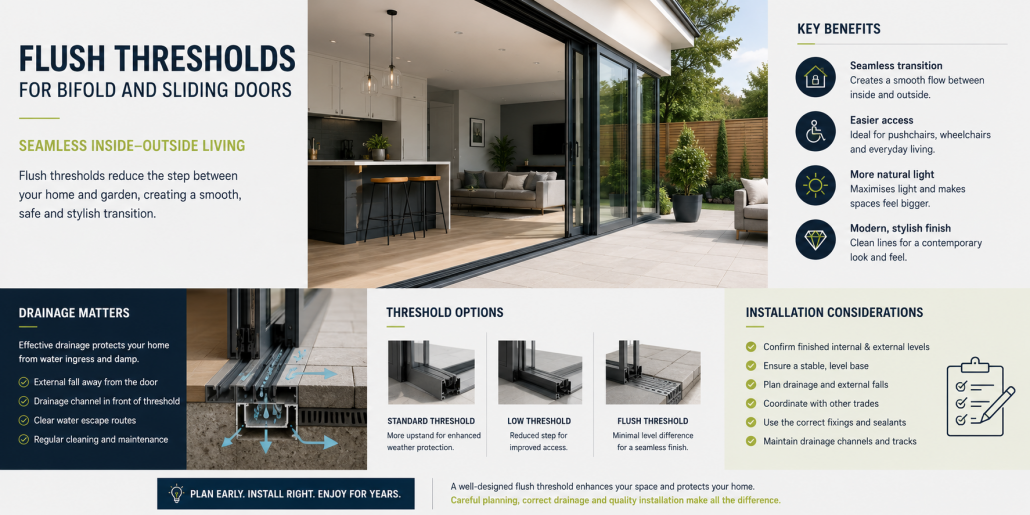
Flush Thresholds for Bifold and Sliding Doors: Benefits, Drainage and Installation Considerations
Flush thresholds are one of the most popular features in modern aluminium bifold and sliding door projects.
They help create a smooth transition between inside and outside, making kitchens, extensions and living spaces feel more open, accessible and connected to the garden.
But while a flush threshold can look simple, it needs careful planning.
Floor levels, drainage, weather exposure, installation tolerances and product choice all matter. If these details are not considered early, a flush threshold can lead to water issues, uneven finishes or an installation that does not perform as expected.
This guide explains what flush thresholds are, why they are popular, and what homeowners, builders and installers need to know before choosing one for aluminium bifold or sliding doors.
What Is a Flush Threshold?
A flush threshold is a door threshold designed to sit as close as possible to the finished internal and external floor levels.
The goal is to reduce the step between inside and outside.
On aluminium bifold and sliding doors, this can help create a clean, modern look where the internal floor, door track and external patio or decking feel almost continuous.
Flush thresholds are often used for:
- Kitchen extensions
- Open-plan living spaces
- Garden rooms
- New-build homes
- Renovation projects
- Patio doors
- Large sliding doors
- Aluminium bifold doors
They are especially popular where the design aim is to create a seamless indoor-outdoor living space.
Flush Threshold vs Low Threshold vs Standard Threshold
The terms flush threshold, low threshold and standard threshold are sometimes used interchangeably, but they do not always mean the same thing.
Flush Threshold
A flush threshold is designed to minimise the level difference between inside and outside. It gives the most seamless appearance, but it needs careful drainage and floor-level planning.
Low Threshold
A low threshold reduces the step compared with a standard threshold. It may still have a small upstand or visible track detail.
Standard Threshold
A standard threshold usually gives stronger weather protection, but it creates a more noticeable step between inside and outside.
The right option depends on the project, exposure, accessibility needs and drainage design.
Why Choose a Flush Threshold?
1. Seamless Indoor-Outdoor Living
The biggest benefit of a flush threshold is the sense of connection it creates.
When the internal floor runs almost level with the outside patio, terrace or decking, the space feels larger and more open.
This is ideal for kitchen-diners, garden-facing living rooms and modern extensions.
2. Easier Access
Flush thresholds can make movement between inside and outside easier.
This is useful for families, wheelchair users, pushchairs, older homeowners and anyone who wants to reduce trip hazards.
Approved Document M provides guidance on access to and use of buildings, including dwellings, and is often relevant where level access is being considered.
3. A Cleaner Modern Finish
Aluminium bifold and sliding doors are often chosen for slim frames, large glass areas and contemporary design.
A flush threshold supports that look by reducing visual interruptions at floor level.
4. Better Flow for Entertaining
For garden parties, summer dining and open-plan living, flush thresholds can make the space feel more practical and sociable.
People can move between the kitchen, dining area and garden more easily.
5. Improved Usability
A lower threshold can make everyday use more comfortable, especially in high-traffic areas.
This is particularly helpful on doors used frequently throughout the day.
Why Flush Thresholds Need Careful Planning
A flush threshold is not just a product choice. It is a construction detail.
For it to work properly, the door system, internal floor, external surface, drainage and installation method all need to be considered together.
The main risk is water.
A standard threshold naturally creates more separation between outside weather and the internal floor. When the threshold is made lower, the surrounding drainage and weathering details become more important.
That does not mean flush thresholds should be avoided. It means they should be designed properly from the start.
Drainage: The Most Important Consideration
Drainage is one of the most important parts of any flush threshold design.
Rainwater must be directed away from the door, not towards it. If water is allowed to sit against the track or threshold, it can increase the risk of leaks, staining, damage or poor long-term performance.
A good flush threshold detail may include:
- A suitable external fall away from the door
- A drainage channel in front of the threshold
- Correct sill or track drainage
- Clear water escape routes
- Proper waterproofing below the door
- Suitable patio, paving or decking levels
- Regular maintenance to keep channels clear
For flat roofs, balconies and terraces, NHBC notes that its Standards include technical requirements and guidance for design and construction, including areas such as drainage and construction standards.
External Floor Levels
External floor levels must be planned carefully.
If the patio, decking or terrace is too high, water may sit against the door. If it is too low, the threshold may no longer feel flush.
The external surface should usually fall away from the building so rainwater drains safely.
Before installation, confirm:
- Finished internal floor level
- Finished external floor level
- Door frame position
- Threshold height
- Drainage channel position
- Paving or decking build-up
- Waterproofing and damp-proofing details
This should be agreed before the door is ordered, not adjusted after installation.
Weather Exposure
Not every opening is exposed to the same conditions.
A sheltered rear extension may perform differently from a coastal property, open elevation or exposed west-facing opening.
Flush thresholds need extra care where doors are exposed to:
- Strong wind-driven rain
- Coastal weather
- Open fields
- Sloped external ground
- Large patio areas draining towards the house
- Balconies or roof terraces
- Poor existing drainage
In highly exposed locations, a standard weathered threshold or carefully designed drainage system may be more appropriate.
Flush Thresholds for Bifold Doors
Flush thresholds are very popular with aluminium bifold doors because they help create a wide, open connection to the garden.
When the doors are folded back, the opening feels clear and easy to move through.
However, bifold doors have tracks, guide channels and multiple panels, so the threshold detail must be accurate.
Key considerations include:
Track Design
The bifold track must support smooth operation while managing water correctly.
Panel Weight
Bifold panels need a stable, level base so the doors run smoothly and align correctly.
Drainage Channel
A drainage channel may be required in front of the threshold to reduce water risk.
Internal Flooring
Tiles, timber, vinyl or screed levels must be coordinated with the threshold height.
External Finish
Patio slabs, porcelain paving, composite decking or stone should be set at the correct height and fall.
Flush Thresholds for Sliding Doors
Flush thresholds are also popular with aluminium sliding doors.
Large sliding doors often use slim frames and wide glass panels, so a low floor detail can make the whole installation feel more minimal and elegant.
However, sliding doors can involve large, heavy panels. The track and base must be installed level, stable and properly supported.
Key considerations include:
Track Support
The track must sit on a solid, level structure to support the weight of the sliding panels.
Water Management
Sliding door tracks need clear drainage routes to prevent standing water.
Level Accuracy
Small errors in level can affect sliding performance, locking and panel alignment.
Glass Weight and Access
Large sliding panels can be heavy, so access and handling should be considered during the survey.
External Drainage
The external surface should be designed so water does not run back towards the threshold.
Installation Considerations
A successful flush threshold depends on good installation.
Installers should check the opening, structure and levels before the product is manufactured and again before installation.
1. Confirm Finished Floor Levels Early
The internal and external finished floor levels should be known before ordering.
If the floor build-up is not complete, assumptions must be recorded clearly and confirmed before manufacture.
2. Check the Base Is Level and Stable
The threshold and track need a solid, level base. Any movement or unevenness can affect operation and weather performance.
3. Coordinate With Other Trades
Flush thresholds often involve coordination between the glazing installer, builder, landscaper, screeder, tiler and architect.
Poor communication can lead to floors being set too high, drainage channels being missed or paving being installed incorrectly.
4. Allow for Correct Packing and Fixing
The door frame must be packed, fixed and sealed correctly. Ordering too tight can make installation difficult and reduce tolerance for adjustment.
5. Plan the Drainage Channel
If a drainage channel is needed, it should be positioned and specified early.
The channel should be suitable for the expected water load and should connect to a safe drainage route.
6. Check Weathering and Sealing Details
Sealants, membranes, sill details and waterproofing must be installed carefully to protect the junction between door and building.
7. Keep Drainage Routes Clear
Even the best drainage detail can fail if it becomes blocked.
Homeowners should be advised to keep channels, slots and tracks clear of leaves, dirt and debris.
Common Mistakes With Flush Thresholds
Setting the External Floor Too High
This can allow water to sit against the door and increase the risk of leaks.
Forgetting the Drainage Channel
A flush finish often needs drainage support, especially in exposed locations.
Assuming “Flush” Means Completely Flat
Most systems still need a track, small upstand or drainage detail. The exact finish depends on the product and site conditions.
Measuring Before Floor Levels Are Known
Incorrect assumptions can result in the threshold being too high or too low.
Ignoring Weather Exposure
A flush threshold on a sheltered extension is not the same as a flush threshold in an exposed coastal location.
Poor Coordination Between Trades
If the door installer, builder and landscaper are not aligned, the finished detail may not work.
Is a Flush Threshold Completely Level?
Not always.
A flush threshold is designed to reduce the step and create a smoother transition, but there may still be a small upstand, track or drainage detail.
This is important to understand at the start of the project.
The phrase “flush threshold” can mean different things depending on the product, manufacturer and site design. Always ask for a section drawing or technical detail so everyone understands what the finished threshold will look like.
Are Flush Thresholds Weatherproof?
Flush thresholds can perform well when correctly specified and installed.
However, they need the right drainage and weathering details.
In very exposed locations, a fully flush detail may not always be the best choice. A weathered threshold, drainage channel or alternative level detail may provide better long-term performance.
The best solution depends on the project.
Do Flush Thresholds Meet Accessibility Requirements?
Flush or low thresholds can support accessible design by reducing the step at the doorway.
However, accessibility requirements depend on the type of building, project and applicable guidance. Approved Document M is the relevant Building Regulations guidance in England for access to and use of buildings.
For new builds, extensions or commercial projects, the architect, building control provider or approved inspector should confirm the exact requirement.
Are Flush Thresholds Suitable for Coastal Homes?
They can be, but coastal homes need extra care.
Coastal locations often face stronger wind, driving rain, salt exposure and more demanding weather conditions.
For coastal projects, consider:
- More robust drainage
- Suitable marine-grade finishes where required
- Weather exposure of the opening
- Regular cleaning and maintenance
- A threshold option designed for the conditions
- Advice from the system supplier or installer
Maintenance Tips for Flush Thresholds
Flush thresholds need simple but regular maintenance to keep them working well.
Homeowners should:
- Keep tracks clear of leaves and grit
- Clean drainage slots regularly
- Check drainage channels after heavy rain
- Avoid blocking water escape routes with patio furniture or planters
- Sweep external paving near the doors
- Report any standing water early
- Follow the manufacturer’s care guidance
A small amount of maintenance can help protect long-term performance.
Questions to Ask Before Choosing a Flush Threshold
Before choosing a flush threshold for bifold or sliding doors, ask:
Is this threshold suitable for my site exposure?
A sheltered garden room and an exposed coastal opening may need different details.
What will the finished floor levels be?
Internal and external levels must be confirmed before ordering.
Does the system need a drainage channel?
Many flush or low-threshold details benefit from dedicated drainage in front of the door.
Will the external surface fall away from the door?
Water should drain away from the threshold, not towards it.
Can I see a section drawing?
A technical section helps show the frame position, track, upstand, floor levels and drainage detail.
Who is responsible for drainage?
Agree whether the builder, landscaper, installer or main contractor is responsible for each part of the drainage design.
Is a flush threshold right for bifold or sliding doors?
The answer depends on the product, opening size, use, weather exposure and design goal.
Flush Thresholds: Pros and Cons
Benefits
- Creates a seamless indoor-outdoor look
- Makes spaces feel larger and more connected
- Improves access and reduces trip hazards
- Works well with modern aluminium doors
- Ideal for open-plan kitchen extensions
- Helps support accessible design
Considerations
- Needs careful drainage planning
- Requires accurate floor levels
- May not suit every exposed location
- Must be coordinated with other trades
- Tracks and drainage routes need maintenance
- Not always completely flat in practice
Simple Summary: What Homeowners and Installers Need to Know
A flush threshold can create a beautiful, modern transition between your home and garden.
It is especially popular for aluminium bifold and sliding doors in extensions and open-plan living spaces.
However, a flush threshold is not just about appearance. It must be designed around floor levels, drainage, weather exposure and installation accuracy.
The best results come when the threshold detail is planned early, the finished levels are confirmed, and drainage is properly designed before installation begins.
Choosing Flush Threshold Aluminium Doors With Nu-Scene
At Nu-Scene, we help homeowners, builders, installers and developers choose aluminium bifold and sliding door systems that suit the design and performance needs of each project.
Whether you want a clean, modern flush threshold, a low threshold for easier access or a more weathered option for exposed conditions, our team can help you understand the choices available.
By planning the threshold, drainage and floor levels from the start, you can achieve a stylish finish that looks great and performs properly.
FAQs About Flush Thresholds
What is a flush threshold?
A flush threshold is a door threshold designed to reduce the step between the internal and external floor levels, creating a smoother transition between inside and outside.
Are flush thresholds suitable for bifold doors?
Yes. Flush thresholds are popular for aluminium bifold doors, especially where the goal is seamless indoor-outdoor living. They need careful drainage and level planning.
Are flush thresholds suitable for sliding doors?
Yes. Flush thresholds can work very well with aluminium sliding doors, especially large modern glazing systems. The track must be well supported and correctly drained.
Do flush thresholds leak?
A flush threshold should not leak if it is correctly specified, installed and maintained. However, poor drainage, incorrect levels or exposed conditions can increase the risk of water problems.
Do I need a drainage channel with a flush threshold?
Often, yes. A drainage channel can help manage rainwater and reduce the risk of water sitting against the door. The need depends on the site and product detail.
Is a flush threshold completely flat?
Not always. There may still be a small track, upstand or drainage detail. Ask for a section drawing before ordering so you know what the finished detail will look like.
Are flush thresholds good for accessibility?
They can help improve access by reducing the step at the doorway. Exact accessibility requirements depend on the project and applicable Building Regulations guidance.
What is the biggest mistake with flush thresholds?
The biggest mistake is choosing a flush threshold without planning floor levels and drainage. These details should be confirmed before manufacture and installation.



Leave a Reply
Want to join the discussion?Feel free to contribute!